
Northern Army Commander Lieutenant General Pratik Sharma reviewed the ongoing anti-terrorist operation 'Sheruwali' in the Rajouri district of Jammu and Kashmir, focusing on operational dynamics and inter-agency synergy.

Security forces continue 'Operation Sheruwali' for the seventh day in Rajouri district, Jammu and Kashmir, to hunt down Pakistani terrorists, while another anti-terrorist search operation was launched in neighbouring Poonch district.

Security forces in Jammu and Kashmir's Rajouri district launched a fresh fire assault and multiple grenade launcher attacks on suspected terrorist hideouts, marking the sixth day of the anti-terror operation in the dense forests.

Gwadar is viewed as a critical pearl in China's maritime strategy as it would give a permanent logistical footprint near an important choke point - the Strait of Hormuz and the oil rich Persian Gulf, explains Commodore Venugopal Menon (retd).
A Pakistani national has pleaded guilty to attempting to commit an ISIS-inspired attack at a Jewish centre in New York in 2024, coinciding with the anniversary of the October 7 Hamas attacks on Israel.

Lashkar-e-Taiba terrorist Umer Harris, also known as 'Khargosh', is believed to be in Saudi Arabia after escaping India using a forged passport. An investigation into the inter-state LeT terror module has exposed systemic loopholes and raised concerns about passport issuance processes.

Security forces in Jammu and Kashmir's Kishtwar district killed two Pakistani terrorists affiliated with Jaish-e-Mohammad (JeM) in an encounter. One of the deceased is believed to be a notorious JeM commander, Saifullah, who had been active in the region for five years.
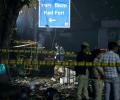
A UN Security Council report indicates that Pakistan-based Jaish-e-Mohammed (JeM) was reportedly linked to a terror attack on the Red Fort in New Delhi. The report also highlights JeM's activities, including the establishment of a women-only wing and its presence in the region.

Pakistan's former captain Shahid Afridi has said he is not averse to joining politics in the future after he moved his residence from his hometown Karachi to capital Islamabad.

The Indian military also acknowledged suffering some losses but declined to provide the details as the operations are going on.

The local recruitment of terrorists in the Pakistan-sponsored terror groups is also very low as only four locals have joined these groups this year, Army officials told ANI.

In a key revelation, former Central Intelligence Agency (CIA) officer John Kiriakou has said that Al Qaeda founder Osama bin Laden, who was the most wanted terrorist for the United States after the terrorist attacks of September 11, 2001, had escaped from the Tora Bora hills in Afghanistan in the guise of a woman.

Glimpses from India and around the world that will make you smile and cry.

Heavy security has been deployed at vital installations in Delhi, including government buildings and areas with high footfalls, following Pakistan's drone attacks on Indian military sites. Police have strengthened vigil in areas with high footfalls and have canceled leaves for all Delhi Police personnel. The developments come after India swiftly thwarted Pakistan's attempts to strike military sites with drones and missiles.

'Pakistan wanted India out of Afghanistan to which again the Taliban told Pakistan to take a walk.' 'Six months after they came back to power in 2021 India was back in Afghanistan at the request of the Taliban.' 'The Taliban realised that India has no agenda of its own in Afghanistan.'

The Chandigarh administration on Friday sounded a fresh air raid siren, appealing to people to remain indoors. The development came amid escalating tension between India and Pakistan.
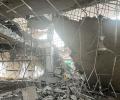
Indian Air Force S-400 Sudarshan Chakra air defence missile systems were fired last night against targets moving towards India. The targets were successfully neutralised in the operation multiple domain experts told ANI.
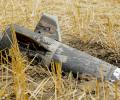
Debris resembling parts of a missile was found in a field in Hoshiarpur, Punjab, while metal parts of unidentified objects were discovered at two locations in Bathinda, sparking panic among locals. The incidents come after India successfully thwarted Pakistan's attempts to target military installations with drones and missiles across the country.

A villager was killed and three others were injured in shelling by Pakistan in forward areas of Jammu and Kashmir's Poonch and Rajouri districts early Friday morning, prompting Army troops to retaliate. The shelling also caused significant damage to property, with many houses and hundreds of vehicles affected. The firing and shelling were directed at areas in Rajouri, Poonch, and Jammu districts, apart from Kashmir's Kupwara and Baramulla districts, overnight.

A senior government official confirmed that after a meeting with other stakeholders, the decision has been taken and airlines and airport authorities have been informed about it.
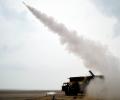
The Indian Army in the intervening night of May 8 and May 9 successfully repelled and responded to multiple drone attacks by Pakistan along the western border and the Line of Control (LoC) in Jammu and Kashmir.
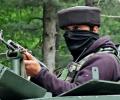
The firing exchanges are taking places in five districts out of seven border districts of Jammu and Kashmir. So far, there has been no firing reports along International Border in Samba and Kathua districts.
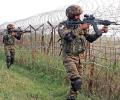
Pakistan troops have violated the ceasefire agreement for the 11th consecutive night, firing on Indian posts along the Line of Control (LoC) in Jammu and Kashmir. The firing began in Kupwara and Baramulla districts and spread to other sectors, including Poonch, Rajouri, Mendhar, Naushera, Sunderbani, and Akhnoor. The Indian Army responded promptly and proportionately. The ceasefire violation comes despite a recent phone call between the Directors General of Military Operations (DGMOs) of India and Pakistan on April 29. This marks the latest escalation of tensions between the two countries, following a terror attack in Pahalgam in April.

Pakistani drones were intercepted by Indian air defence in Jaisalmer. Explosions were heard and flashes seen in the sky.
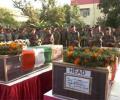
Speaking to media-persons after paying his last tributes to five soldiers, including two Army captains, who lost their lives in the Rajouri firefight, Lt Gen Dwivedi said, "While we lost five of our brave soldiers in the encounter, we also eliminated two dreaded terrorists. Our boys went after the well-trained and equipped foreign terrorists without giving any thought to their personal safety. This (taking out the dreaded terrorists) has dealt a major blow to the terror ecosystem and Pakistan. As per our estimation, 20-25 terrorists could still be operating in the area. We should be able to control the situation in a year's time with the help of locals."

With this decision, the government headed by Prime Minister Narendra Modi has sought to draw a red line against terror incidents and makes clear that it will follow a similar military response as it has after the Pahalgam incident if terrorists linked to Pakistan target India again.
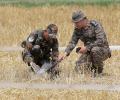
Metal debris was found scattered in three villages of Amritsar district, with some locals claiming them to be parts of missiles. Police are investigating the objects, while the Indian government claims to have foiled Pakistan military's attempts to attack 15 places in northern and western India using missiles and drones. Tensions between India and Pakistan have escalated after India launched missile strikes on terror targets in Pakistan and Pakistan-occupied Kashmir (PoK) in response to the April 22 killing of 26 people by terrorists in Kashmir's Pahalgam.

India on Thursday night swiftly foiled Pakistan's attempts to hit various key Indian installations including military stations at Jammu, Pathankot and Udhampur with drones and missiles, the defence ministry said.
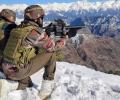
Pakistan's troops have engaged in unprovoked firing along the Line of Control (LoC) and International Border (IB) in five districts of Jammu and Kashmir, prompting retaliation from the Indian Army. This marks the eighth consecutive night of such incidents, following heightened tensions stemming from a recent terror attack in Pahalgam. Civilians residing along the LoC and IB are preparing their bunkers in anticipation of potential escalation.
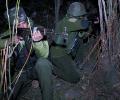
For the ninth consecutive night, Indian and Pakistani troops engaged in small arms fire along the Line of Control (LoC) in Jammu and Kashmir, continuing a pattern of heightened border tensions. The skirmishes, initiated by Pakistani troops in violation of the ceasefire agreement, have led to a tense situation along the LoC and International Border (IB). The incidents come in the wake of the April 22 terror attack in Pahalgam, which claimed the lives of 26 people, mostly tourists. Civilians residing near the border have begun preparing their bunkers, anticipating potential escalation. Despite a recent hotline conversation between the Directors General of Military Operations (DGMOs) of India and Pakistan, where India cautioned Pakistan, the ceasefire violations persist.

Suspected drones were observed along the International Border in Samba district of Jammu region on Monday, while armed forces downed a 'surveillance drone' in Punjab's Jalandhar district.

Meanwhile, a precautionary blackout has been enforfced in the multiple areas amid the esclating tensions between India and Pakistan.
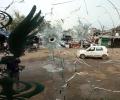
People in several districts of Punjab, Jammu and Kashmir and Gujarat spent an anxious night as authorities enforced blackouts amid heightened tension between India and Pakistan.
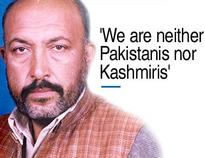
The world knows about the troubles in Jammu and Kashmir, but Gilgit-Baltistan remains a blind spot. Balawaristan National Front leader Nawaz Khan Naji explains why they are fighting for independence. An exclusive interview.
Colonel Sofiya Qureshi revealed that 300 to 400 drones were deployed across 36 locations, with several being shot down by Indian forces using both kinetic and non-kinetic methods.

The foremost lesson for India today is to beef up its air defence to cater for multiple drone attacks. As seen in Operation Sindoor, we have come a long way, but there's room for getting better. We must develop a robust and almost impregnable air cover over ourselves, asserts IAF veteran Air Commodore Nitin Sathe (retd).

'Had Haji Pir and/or Skardu been taken, the message would have gone out not just to General Asim Munir and his cohort in the Pakistan army but to the Pakistani people that every terrorist incident in India would lead to substantial loss of territory in PoK.'
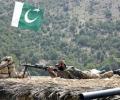
Violating the ceasefire, Pakistani Rangers on Sunday opened fire at Tawi area in R S Pura sector of Jammu district.

For India, it is a symbol of will and a successful feat of arms.

India failed to extract the 'price' from Pakistan for its Kargil misadventure.
The price could have been military in terms of loss of territory/soldiers/equipment or destruction of terrorist training infrastructure. Giving a 'face saving' option to Pakistan proved disastrous for the future, asserts Colonel Anil A Athale (retd).
